Houseplants: A Guide to Healthy Indoor Winter Gardens
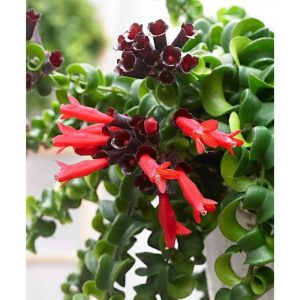
Curly Lipstick Plant (Aeschynanthus radicans ‘Rasta’)
The Curly Lipstick Plant is prized for its glossy, twisted leaves and vibrant red flowers that emerge from dark buds that resemble tubes of lipstick.
Growth: Curly Lipstick is a great hanging plant. Each growth branch will continue to elongate. Trim back to keep it bushier.
Flowering: It will bloom mostly along the ends of each growing branch.
Light: Bright, indirect light encourages healthy growth and abundant blooms. Avoid prolonged direct sunlight, which can scorch the leaves. It will grow well in a brightly lit area or a south or west-facing window for the winter.
Water & Humidity: Allow the top inch of soil to dry between waterings. Water thoroughly, but do not allow the plant to sit in soggy soil. Prefers moderate to high humidity. Bathrooms, kitchens, or rooms with a humidifier are often ideal locations.
Temperature: This plant will live comfortably outside from June to mid-September when night temperatures are above 50*F. Bring it inside, usually mid-September in New Hampshire. Do be careful of drafts when inside for the winter.
Fertilizer: Feed in the Spring with an organic pelleted fertilizer or monthly during spring and summer with an organic liquid fertilizer diluted to half strength.
Common Problems: Leaf drop and poor flowering are often caused by low light, cold temperatures, or inconsistent watering. Overwatering can lead to root rot.
Non-Toxic to Pets
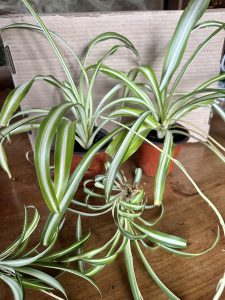
Spider Plant (Chlorophytum comosum)
Spider Plants are one of the easiest houseplants to grow and are well-loved for their arching leaves and baby plantlets.
Light: Adaptable to many conditions but prefers bright, indirect light.
Water: Water when the top inch of soil feels dry. They tolerate occasional missed waterings better than overwatering.
Fertilizer: Apply a balanced fertilizer every month during active growth or a pelleted organic fertilizer in the spring and fall.
Common Problems: Brown leaf tips may result from fluoride or salts in tap water. Using filtered or rainwater can help. Spider plants have a robust root system and can burst out of a pot when root-bound.
Non-Toxic to Pets
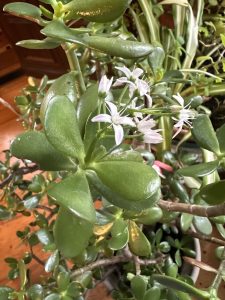
Jade Plant (Crassula ovata)
A symbol of good luck and prosperity, the Jade Plant is a long-lived succulent that can become quite tree-like with age.
Growth: Keep the Jade plant trimmed to prevent it from getting spindly. Pinch the growth tips to encourage branching. Jade plants can live for years and grow into small indoor ‘trees’.
Flowering: Jade plants can flower when given enough light and the right conditions. They are small, white, clustered flowers.
Light: Requires several hours of bright light daily. A sunny south-facing window is ideal.
Water: Allow the soil to dry completely between waterings. Water sparingly during winter.
Soil: Use a well-draining cactus or succulent mix.
Fertilizer: Feed lightly once or twice during the growing season.
Common Problems: Soft, yellowing leaves often indicate overwatering.
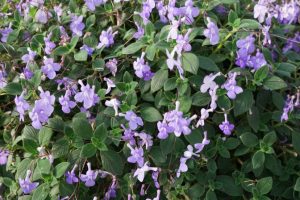
Cape Primrose (Streptocarpus saxorum)
Growth: Cape Primrose is a low-growing plant, not usually taller than 8 inches. They form branching stems with velvety, opposite leaves.
Flowering: flowers appear on wiry stems above the foliage and have five-lobed blue flowers, similar to blue violets.
Light: Filtered, indirect light is best. When outside, no direct afternoon sun. Hot sun will burn the leaves.
Water: Keep soil moist without being soggy. Overwatering can lead to root rot.
Soil: Well-drained, organic potting mix.
Fertilizer: Apply a balanced fertilizer every month during active growth or a pelleted organic fertilizer in the spring and fall.
Common Problems: Cape Primrose is rarely bothered by pests or disease.
Non-Toxic to Pets
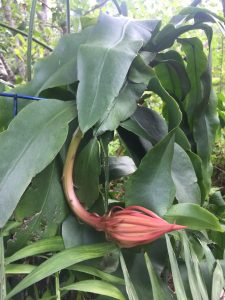
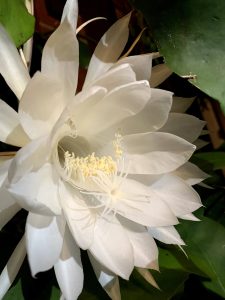
Queen of the Night (Epiphyllum oxypetalum)
This fascinating cactus is famous for its large, fragrant flowers that bloom for a single night.
Light: Bright, indirect light or filtered sun.
Flowering: These unusual plants form buds on a curved stem that grow to look like pods at the end of the hooked stem. They start small, about 1 inch, and grow to a foot long. Then each bud will open for only one night. The blossoms range from six to ten inches across and have a distinctive fragrance.
Water: Water when the top few inches of soil become dry. Reduce watering during winter.
Humidity: Appreciates moderate humidity.
Soil: Use a well-draining cactus mix amended with organic matter.
Fertilizer: Feed monthly during spring and summer with a bloom-supporting fertilizer.
Common Problems: Excessive direct sun can cause yellowing or scorched stems.
Not poisonous for pets, but could cause upset if stems are chewed.
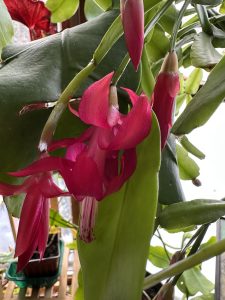
Christmas Cactus (Schlumbergera spp.)
Unlike desert cacti, Christmas Cactus naturally grows in the shaded branches of Brazilian forests.
Light: Bright, indirect light.
Water: Keep soil evenly moist but never soggy. Allow the top inch of soil to dry slightly between waterings.
Fertilizer: Feed monthly during active growth, stopping in late summer to encourage blooming.
Encouraging Blooms: To trigger flower production, provide cooler nighttime temperatures and 12–14 hours of darkness each night for several weeks in autumn. When allowing your plant to be outdoors, under the shade of a tree or other sheltered spot in the summer, and bringing it indoors in September, you will automatically trigger the flower process to begin.
Common Problems: Bud drop is often caused by sudden temperature changes, drafts, or moving the plant while buds are forming.
Non-Toxic to Pets
General Houseplant Tips
- Rotate plants every few weeks to encourage even growth.
- Dust leaves regularly so they can efficiently absorb light.
- Check plants frequently for pests such as spider mites, mealybugs, and aphids.
- Choose pots with drainage holes whenever possible.
- Water according to each plant’s needs rather than following a fixed schedule.